

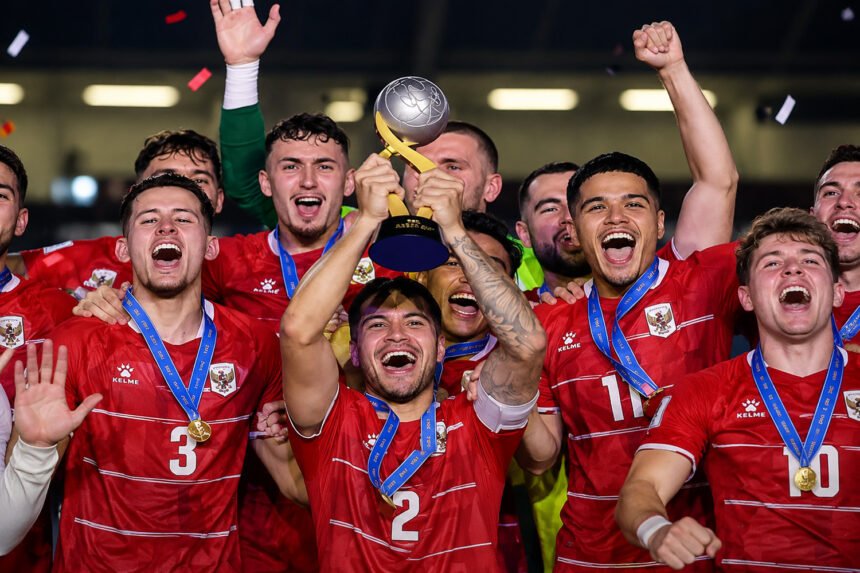
Few moments in football match the emotion of a penalty shootout, and Indonesia has just lived through one that ended in celebration. According to the headline, Indonesia has been crowned FIFA ASEAN Cup 2026 champions after a dramatic penalty finish. The photo tells the rest of the story: players in red shirts, medals around their necks, and a silver trophy raised high amid roaring cheers. For a nation of passionate supporters, this is a landmark night. This blog explores what the victory means, why penalty drama defines tournaments, the demanding travel behind regional football, and practical tips for fans.
What the Image Tells Us
Look closely at the celebration. Players crowd around the trophy, mouths wide open in joyful shouts, while one raises the cup above the group. Everyone wears the national red kit with the Garuda crest, and every neck carries a medal. Confetti hangs in the background, suggesting a stadium or tunnel moment right after the final whistle.
The emotion matters as much as the silverware. There is relief in those faces, and a shootout produces that feeling like nothing else. One miss can decide a final, so the players who stand together here have survived the sport’s most stressful minutes.
Why Penalty Drama Makes Champions
A shootout strips football down to its simplest form: one kicker, one goalkeeper, and a whole nation holding its breath. Preparation helps, but nerves decide much of the outcome. Teams typically rehearse penalty routines in training, choose takers in advance, and study opposing goalkeepers.
Goalkeepers become heroes in these moments, while kickers carry a heavy emotional load. Winning this way builds belief, because a squad that survives such pressure often grows tighter. For Indonesia, this victory shows mental strength as well as technical quality. Tournaments are often remembered for exactly these tense minutes, and fans will talk about this one for years.
Indonesia’s Long Road in Regional Football
Indonesia has long been one of Southeast Asia’s most passionate football nations, with huge crowds and a fiercely loyal fan culture. Historically, though, the country became known for coming close without lifting the main regional prize. Indonesia reached the final of the region’s flagship championship on six occasions in earlier editions and finished as runner-up each time. That history gives this win extra emotional weight.
The competition itself has grown in profile. Now carrying the FIFA ASEAN Cup name, it reflects the global governing body’s increasing interest in the region. For supporters who waited generations for a trophy moment, the image of a captain-style lift under the lights is deeply symbolic.
Facts About the Team’s Travel
Regional football is a travel story as much as a sporting one. Indonesia is the world’s largest archipelago, with more than 17,000 islands, and it stretches roughly 5,000 kilometres from west to east across three time zones. Even domestic football involves long flights, so the national team is used to logistics that other squads rarely face.
Tournament travel adds more layers:
- Regional hops: Matches across Southeast Asia usually mean flights of about two to four hours between capitals, such as Jakarta to Kuala Lumpur or Bangkok.
- Home-and-away rhythm: Regional tournaments often use fixtures in different countries, so squads pack, fly, recover, and prepare again within days.
- Climate shifts: Heat and humidity vary by city, which affects hydration plans and training schedules.
- Recovery windows: Short gaps between matches make sleep, nutrition, and physiotherapy essential.
Behind every trophy photo sits a chain of airport transfers, hotel rooms, and early-morning training sessions.
The Diaspora Factor and Squad Journeys
In recent years, Indonesian football has drawn attention for including players with international backgrounds, especially from European leagues. Many of these players travel long distances to join national camps, moving between club duties abroad and national duty at home. That journey adds jet lag, adjustment to local conditions, and the work of building chemistry with teammates who grew up in the domestic system.
When a squad blends local knowledge with overseas experience, the result can be a richer tactical mix. This win suggests that the blend is working, though the exact contribution of each player deserves proper match-by-match analysis.
What the Victory Means for Fans and Bali
A trophy changes the mood of a country. Fans gather in cafés, living rooms, and public screens, and the celebration spreads to social media within seconds. Local media outlets, including Bali-based platforms that flagged this story as trending, show how national sporting moments reach every island.
In tourist-heavy places like Bali, major results also create shared moments between locals, expats, and visitors. Bars, beach clubs, and fan zones often fill with people wearing red. Football, like music, turns strangers into a crowd with one voice.
Practical Tips for Fans Who Want to Follow the Team
- Use official sources: Check the federation and tournament channels for fixtures, ticketing, and broadcast details.
- Plan travel early: Match weekends raise flight and hotel demand, so book ahead.
- Stay flexible: Choose refundable fares in case dates or venues change.
- Arrive early: Stadium security checks take time, and early arrival gives better seats.
- Respect local rules: Follow stadium regulations and keep celebrations safe.
Conclusion
Indonesia’s FIFA ASEAN Cup 2026 triumph is a story of nerve, belief, and long-awaited joy. The penalty drama gave the final its tension, while the team’s travel demands remind us how much effort sits behind every celebration. For supporters, the image of that raised trophy will remain a lasting symbol of progress. For the wider region, it shows how football can unite fans across islands and borders. If you want to follow the national team’s next chapter, stay close to official channels, plan trips carefully, and enjoy every moment responsibly.
Frequently Asked Questions
How can I watch Indonesia national team matches live from abroad?
Check official broadcaster announcements and the tournament’s streaming partners for your country. Use only licensed platforms, avoid pirated streams, and set reminders in your own time zone before the kickoff.
What should I know before travelling to Indonesia for a football match?
Confirm your visa or visa-on-arrival eligibility, buy tickets only from official sellers, and book accommodation near the stadium early. Carry ID, travel insurance, and allow extra time for heavy traffic.
How do I avoid fake tickets when buying football tickets in Indonesia?
Buy only through the federation’s or organiser’s official ticketing channels. Ignore social media sellers, verify QR codes and event details, and keep payment receipts for refund claims if problems arise.