

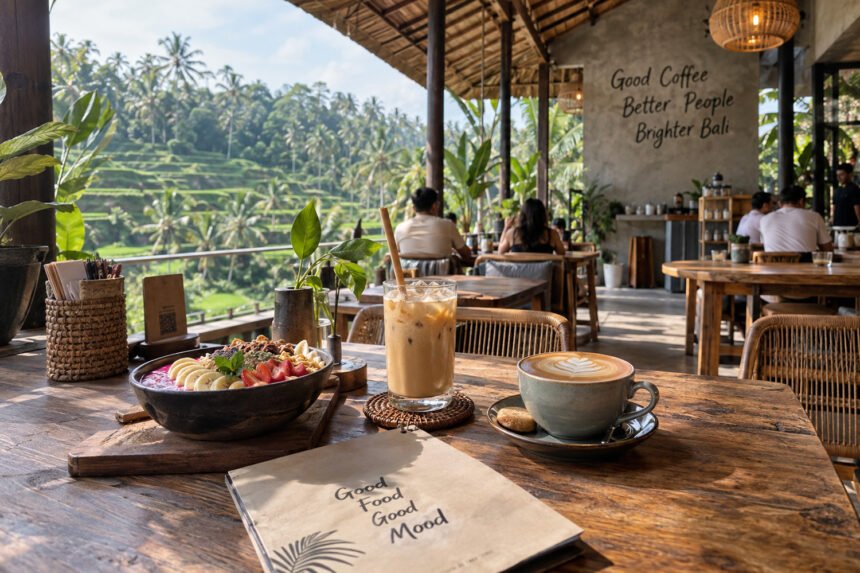
Bali’s café culture has evolved far beyond simple coffee shops. Across Ubud, Canggu, and Seminyak, a new generation of café owners has turned their spaces into design statements — think raw concrete forms, reclaimed teak furniture, jungle-facing glass walls, and interiors that feel as considered as the coffee itself. For travellers who care as much about atmosphere and aesthetics as they do about their morning brew, Bali offers one of Southeast Asia’s most interesting café scenes. Here’s a guide to where architecture, interior design, and genuinely good coffee intersect.
Ubud: Where Nature Meets Minimalism
Ubud’s café scene leans heavily into its jungle and rice-paddy surroundings, with many spaces designed to blur the line between indoor and outdoor. Open-air structures with soaring bamboo roofs, floor-to-ceiling glass panels overlooking rice terraces, and interiors built from natural, unfinished materials define the area’s aesthetic. The design philosophy here tends to prioritise stillness — low furniture, muted tones, and an emphasis on natural light rather than bold statement pieces.
What to look for: Bamboo architecture, terrace views over rice paddies, and a calm, unhurried pace that matches Ubud’s wellness-focused identity. Many of these cafés also serve as informal community hubs, with communal tables encouraging conversation between travellers and locals alike.
Canggu: Industrial-Meets-Tropical Design
Canggu has become Bali’s epicentre for design-forward hospitality, and its cafés reflect a distinctly different aesthetic from Ubud’s natural minimalism. Expect raw concrete surfaces, exposed steel beams, mid-century-inspired furniture, and bold use of colour and pattern in tile work and signage. Many spaces here double as concept stores or plant shops, blending retail with coffee culture in a way that feels curated rather than accidental. The area’s rapid growth has also brought a wave of architecturally ambitious buildings, with dramatic curved walls, skylights, and sculptural staircases becoming almost as photographed as the coffee itself.
What to look for: Bold structural design, indoor-outdoor flow with surf-culture undertones, and menus that often extend into specialty brewing methods like pour-over and cold drip alongside more elaborate food offerings.
Seminyak: Polished and Considered
Seminyak’s café scene sits somewhere between Canggu’s boldness and Ubud’s calm, favouring a more refined, boutique-hotel aesthetic. Interiors here often draw on a warmer palette — rattan detailing, brass fixtures, and tailored furniture — creating spaces that feel more like a lounge than a casual coffee stop. Many Seminyak cafés are attached to boutique retail or design studios, reflecting the area’s broader identity as a shopping and lifestyle destination rather than a backpacker hub.
What to look for: Considered material palettes, boutique retail crossover, and a slightly more formal, dressed-up café experience compared to Canggu or Ubud.
Understanding Bali’s Coffee Culture
Beyond the design, Bali has a genuine coffee heritage worth understanding. The island’s volcanic highlands, particularly around Kintamani near Mount Batur, produce Arabica beans grown at elevation, often intercropped with citrus trees that some claim lend a subtle fruitiness to the cup. Robusta is more commonly grown at lower elevations across the island and forms the base for many traditional preparations.
The most talked-about — and most debated — Balinese coffee product is kopi luwak, made from beans that have passed through the digestive tract of the Asian palm civet. While genuinely wild-sourced kopi luwak does exist and carries a distinctive, low-acid flavour profile, much of what’s sold to tourists comes from caged-civet operations, which raise significant animal welfare concerns. Design-conscious, ethically minded cafés increasingly avoid caged kopi luwak altogether, instead highlighting single-origin Balinese Arabica prepared through manual brewing methods that let the bean’s characteristics speak for themselves.
A note for conscious travellers: If sampling kopi luwak matters to you, ask specifically whether the beans are wild-collected rather than farmed, and be prepared for a noticeably higher price point reflecting genuine scarcity.
Design Elements That Define Bali’s Best Cafés
Across all three areas, a few recurring design principles separate the most memorable cafés from generic coffee shops:
- Material honesty: The best spaces lean into raw concrete, unfinished wood, and natural stone rather than disguising materials.
- Indoor-outdoor continuity: Bali’s climate allows for genuinely open architecture, and the strongest café designs treat this as an opportunity rather than an afterthought.
- Considered lighting: Skylights, pendant fixtures made from local materials like rattan or bamboo, and strategic use of natural light define spaces that photograph beautifully at any time of day.
- Local craft integration: Furniture and fixtures sourced from nearby craft villages — carved wood accents, woven textiles, hand-thrown ceramics — give many cafés a sense of place that imported design elements can’t replicate.
Tips for Café Hopping in Bali
- Visit early or late to avoid the mid-morning rush at the most Instagram-famous locations, particularly in Canggu.
- Ask about bean origin, as many cafés proudly source from specific highland farms and are happy to explain their sourcing.
- Budget for slower service at design-focused cafés; many prioritise atmosphere and quality over rapid turnover.
- Bring a light layer, as open-air spaces with strong air circulation can feel cooler than expected, especially in the early morning.
- Look beyond the main strips, as some of the most interesting design work is found in smaller side-street cafés rather than the most heavily marketed locations.
Final Thoughts
Bali’s café scene has matured into a genuine expression of the island’s design sensibility — one that blends tropical materials, thoughtful architecture, and increasingly serious coffee sourcing. Whether it’s Ubud’s jungle-facing minimalism, Canggu’s bold industrial spaces, or Seminyak’s polished boutique feel, each area offers a distinct aesthetic worth seeking out. For travellers who see a café visit as more than a caffeine stop, Bali delivers experiences that reward slowing down and paying attention to the details.