

Bali is far more than golden beaches and rice terraces — it is a living tapestry of faith, ritual, and community. Known as the “Island of the Gods,” Bali’s culture is deeply rooted in Hindu-Balinese philosophy, where every temple bell, dance step, and dish tells a story of devotion. From sunrise offerings placed on doorsteps to grand ceremonies honoring ancestors, Balinese life moves in rhythm with the spiritual and the everyday. This blog explores the island’s sacred temples, cherished traditions, flavorful cuisine, and the spiritual worldview that binds it all together, offering travelers a deeper appreciation of what makes Bali truly unique.
Bali’s Sacred Temples: Gateways to the Divine
Temples, or pura, are the heartbeat of Balinese identity. It is often said that Bali has more temples than homes, and nearly every village, rice field, and family compound has its own shrine. These structures are not merely tourist attractions; they are active places of worship where locals pray, make offerings, and celebrate ceremonies tied to the Balinese lunar calendar.
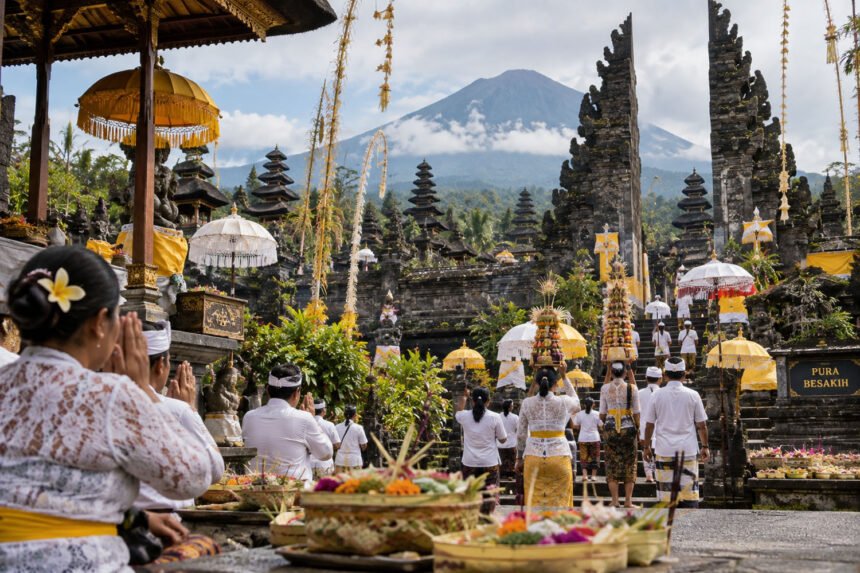
Among the most revered is Pura Besakih, often called the “Mother Temple,” perched on the slopes of Mount Agung. It serves as the spiritual epicenter for the entire island. Tanah Lot, dramatically set on a rock formation surrounded by crashing waves, is another iconic site, especially admired at sunset. Meanwhile, Uluwatu Temple sits atop a cliff facing the Indian Ocean, combining natural beauty with cultural performances like the Kecak fire dance.
Each temple follows a tri-part layout representing the Balinese cosmology — an outer courtyard for daily activities, a middle courtyard for preparation, and an inner sanctum reserved for the holiest rituals. Visitors are usually required to wear a sarong and sash as a sign of respect, reflecting how deeply intertwined tradition and etiquette remain in modern Bali.
Hindu-Balinese Traditions and Rituals
Balinese Hinduism, known as Agama Hindu Dharma, blends Indian Hindu philosophy with animism and ancestor worship, creating a belief system unique to the island. This spiritual foundation shapes nearly every tradition observed today.
One of the most iconic celebrations is Nyepi, the Day of Silence, marking the Balinese New Year. The island comes to a complete standstill — no travel, no work, no lights, and no noise — as locals turn inward for reflection and purification. The night before, however, is filled with energy as communities parade giant ogoh-ogoh effigies representing evil spirits, which are later burned to symbolize cleansing.
Galungan and Kuningan are equally significant, celebrating the victory of dharma (good) over adharma (evil). Streets are lined with penjor — tall, decorated bamboo poles — while families reunite to honor ancestral spirits believed to visit during this period.
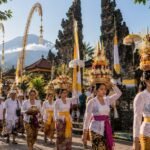
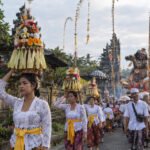
Temple anniversaries, known as odalan, are celebrated with vibrant processions, gamelan music, and elaborate offerings, often unique to each village. These recurring rituals reinforce community bonds and preserve customs passed down through generations.
The Spiritual Life of Bali
At the core of Balinese spirituality lies the philosophy of Tri Hita Karana, meaning “three causes of well-being.” It emphasizes harmony between humans and God, humans and nature, and humans with one another. This principle influences everything from architecture to agriculture, encouraging balance rather than dominance.
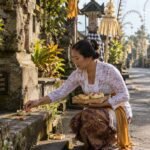
A simple yet powerful expression of this spirituality is the canang sari — small palm-leaf baskets filled with flowers, rice, and incense placed outside homes, shops, and temples each morning. These daily offerings symbolize gratitude and are believed to maintain cosmic balance between the spiritual and physical worlds.
Balinese spiritual life isn’t confined to temples alone; it extends into everyday routines, family ceremonies like tooth-filing rituals marking adulthood, and cremation ceremonies (ngaben) that celebrate the soul’s journey rather than mourning death. This worldview fosters a community deeply connected to purpose, respect, and mindfulness.
Balinese Cuisine: A Feast Rooted in Culture
Food in Bali is inseparable from its spiritual and communal identity. Meals are often prepared for ceremonies before being enjoyed by families, reflecting the belief that nourishment for the soul comes before nourishment for the body.
Babi guling, Bali’s famous spit-roasted pork, is a festive dish traditionally served during celebrations, seasoned with a rich blend of turmeric, galangal, and Balinese spices known as base genep. Lawar, a mix of vegetables, coconut, and minced meat, is another ceremonial favorite, often prepared communally as part of temple festivities.
For everyday meals, nasi campur — steamed rice paired with a variety of small side dishes — showcases the diversity of Balinese flavors in a single plate. Sate lilit, minced fish or chicken wrapped around lemongrass stalks, highlights the island’s love for fragrant, herb-infused grilling.
Balinese cuisine also reflects sustainability, with many dishes relying on locally grown rice, tropical fruits, and fresh coconut. Warungs (small family-run eateries) remain central to Balinese food culture, offering authentic tastes far removed from tourist menus.
Arts, Dance and Music as Cultural Expression
Balinese culture finds vivid expression through performing arts. The Legong dance, characterized by intricate finger movements and expressive eyes, tells stories of royalty and romance. The Barong dance portrays the eternal battle between good and evil spirits, often performed during temple festivals.
Gamelan orchestras, composed of metallophones, gongs, and drums, provide the rhythmic backbone for most ceremonies and performances. Music and dance in Bali are not just entertainment; they are offerings themselves, performed to honor deities and maintain spiritual harmony.
Tips for Respectful Cultural Travel
- Visitors should always dress respectfully and modestly when entering Balinese sacred temples.
- Be mindful of sacred offerings placed on the ground and avoid stepping over them.
- Maintain a quiet and respectful demeanor throughout traditional religious ceremonies.
- Help support local business owners by dining at authentic family-run Balinese warungs.
- Take time to learn and practice a few simple local Balinese greetings.
- Respectfully observe local sacred rituals from a distance without interrupting the ceremony.
Conclusion
Bali’s culture is a beautiful blend of devotion, tradition, and everyday mindfulness that continues to thrive despite modernization and tourism. Its temples stand as spiritual anchors, its rituals reinforce community and gratitude, and its cuisine tells stories passed down through generations. Understanding Bali’s spiritual life offers travelers more than sightseeing — it offers insight into a worldview centered on balance and harmony. Whether witnessing a temple ceremony, tasting authentic Balinese food, or simply observing a morning offering, visitors are invited to experience a culture that values connection over convenience. Respecting these traditions ensures Bali’s rich heritage remains vibrant for generations to come.
Frequently Asked Questions
- What should tourists wear when visiting Balinese temples respectfully?
Wear a sarong and sash, covering shoulders and knees. Many temples provide rentals nearby, but bringing your own is more respectful. - Is it okay to photograph religious ceremonies happening in Bali?
Photography is usually allowed, but stay at a respectful distance, avoid flash, and never interrupt worshippers during prayers or rituals. - Why do Balinese people place offerings everywhere daily?
Offerings, called canang sari, express gratitude and maintain spiritual balance. They’re placed outside homes, shops, and temples each morning without exception. - Can non-Hindu travelers participate in Balinese ceremonies safely?
Yes, if invited respectfully. Follow local guidance, dress appropriately, remain quiet, and avoid entering restricted inner temple areas unless permitted. - What Balinese dishes are must-tries for cultural food experiences?
Try babi guling, lawar, sate lilit, and nasi campur. These dishes reflect authentic Balinese flavors rooted in ceremonial and everyday traditions.