

Bali has a way of turning first impressions into lifelong memories. Between volcanic peaks, emerald rice terraces, ancient temples, and beaches that glow gold at sunset, the island offers far more than a typical tropical getaway. For travellers stepping onto Balinese soil for the first time, the challenge isn’t finding something exciting to do — it’s deciding which experiences deserve a spot on an already crowded wish list. This guide walks through the moments that consistently leave visitors changed, along with practical tips to help you plan a first trip that feels authentic, unhurried, and unforgettable.
Watching Sunrise from Mount Batur
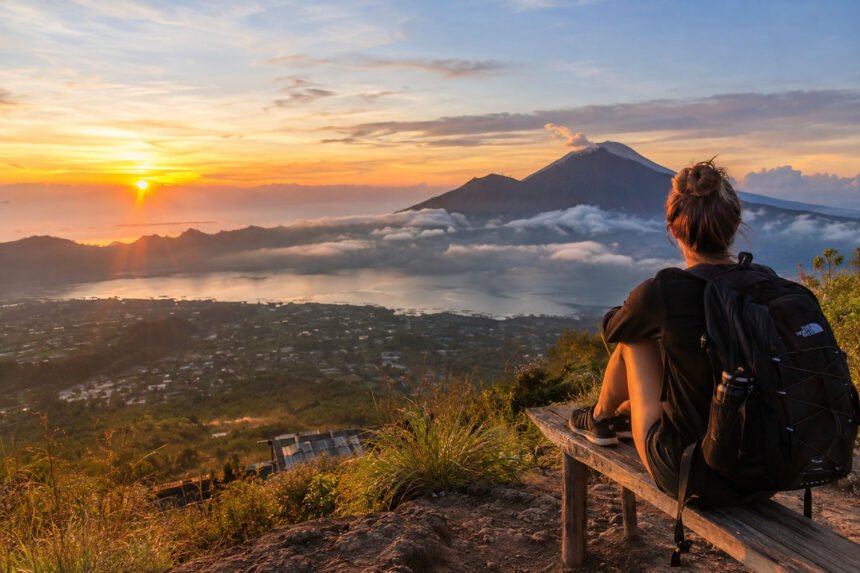
Few experiences capture the spirit of Bali quite like a pre-dawn trek up Mount Batur. Guided hikes typically begin around 3:30 a.m., climbing through darkness with only headlamps and the silhouette of the volcano for company. The reward arrives quietly: as the sky turns from ink to amber, the crater rim reveals a 360-degree view over Lake Batur and, on clear mornings, all the way to Mount Agung. It’s a physically moderate hike — no technical climbing skills required — but sturdy shoes and a warm layer make a real difference at altitude before sunrise.
Losing Track of Time in the Sacred Monkey Forest
Ubud’s Sacred Monkey Forest Sanctuary is more than a wildlife encounter. The forest is a working temple complex, home to three ninth-century Hindu temples wrapped in moss and tree roots, alongside several hundred long-tailed macaques. Wandering the stone pathways beneath a dense canopy feels like stepping into another century. Visitors should keep loose items secured — the resident monkeys are curious and occasionally opportunistic — but the atmosphere of quiet reverence mixed with playful chaos is uniquely Balinese.
Standing Among the Rice Terraces
No first trip to Bali is complete without seeing the island’s famous subak irrigation system in person. Tegalalang, just north of Ubud, is the most visited terrace and offers dramatic tiered views, swings, and small warungs (local eateries) perched along the slopes. For a quieter alternative, Jatiluwih’s UNESCO-recognised terraces stretch across a much larger, less commercialised landscape near Mount Batukaru. Both locations reward an early morning visit, when the light is soft and the crowds haven’t yet arrived.
Temple Hopping Along the Coast and Inland
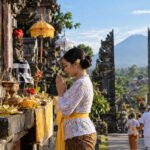
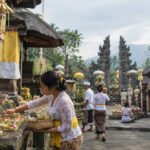
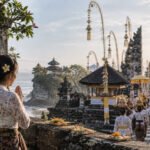
Bali’s temples, or pura, are woven into daily life rather than preserved as museum pieces. Uluwatu Temple sits dramatically on a limestone cliff above the Indian Ocean and is best visited in the late afternoon, when the Kecak fire dance performance coincides with sunset. Tanah Lot, built on a rock formation just offshore, is one of the island’s most photographed sites, particularly at low tide. For those interested in Bali’s spiritual centre, Pura Besakih on the slopes of Mount Agung is considered the mother temple of the island’s Hindu community.
Island Hopping to Nusa Penida
A day trip — or better, an overnight stay — on Nusa Penida introduces visitors to a rawer, more dramatic side of Bali. Kelingking Beach’s cliff formation, often compared to a T-rex silhouette, has become an icon of Indonesian tourism, while Angel’s Billabong and Broken Beach offer natural pools carved into volcanic rock. The boat crossing can be choppy, so travellers prone to seasickness should plan accordingly, but the payoff is some of the most striking coastal scenery in Southeast Asia.
Eating the Way Locals Eat
Balinese cuisine rewards curiosity. Beyond the familiar nasi goreng, first-time visitors should seek out babi guling (spit-roasted suckling pig), bebek betutu (slow-cooked duck wrapped in banana leaf), and sate lilit, a fragrant minced-meat satay pressed onto lemongrass stalks. Warungs — small family-run eateries — often serve the most memorable meals at a fraction of restaurant prices. For a deeper dive, a half-day cooking class in Ubud typically includes a market visit and a hands-on lesson in balancing Bali’s signature blend of chilli, turmeric, and shallots.
Slowing Down with Yoga and Wellness
Ubud’s reputation as a wellness hub isn’t just marketing. Open-air yoga studios overlooking rice paddies, traditional Balinese massage using techniques passed down through generations, and water purification ceremonies at springs like Tirta Empul give travellers a structured way to unwind after days of sightseeing. Even visitors who’ve never tried yoga often describe a single sunrise class in Bali as a highlight of the trip.
Practical Tips for a Smooth First Visit
- Best time to visit: The dry season (April to October) offers the most reliable weather for hiking and beach days.
- Getting around: Renting a scooter is common but requires an international driving permit; hiring a private driver is a safer, low-stress alternative for first-timers.
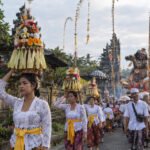
- Respect local customs: Always wear a sarong when entering temple grounds, and avoid stepping on canang sari offerings left on the ground.
- Pace yourself: Bali rewards travellers who slow down. Trying to fit in every experience on a short trip often leads to burnout rather than memories.