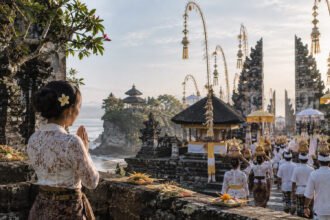


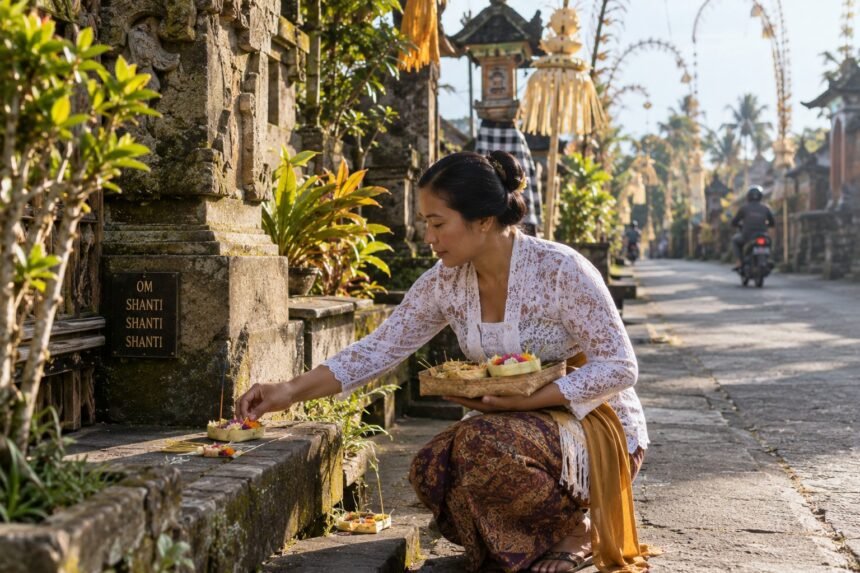
Walk through any street in Bali at sunrise, and you’ll notice small woven trays of flowers, rice, and incense placed on doorsteps, temples, and even car dashboards. These are canang sari, the daily offerings that define Balinese life. Far more than decoration, they represent gratitude, balance, and devotion rooted in Balinese Hinduism. For locals, offerings aren’t occasional rituals but a continuous conversation with the divine, ancestors, and nature. Understanding their meaning reveals how spirituality, tradition, and community are woven into the island’s identity, shaping how Balinese people experience each ordinary day as something sacred.
The Spiritual Roots of Balinese Offerings
Balinese offerings stem from Agama Hindu Dharma, the unique form of Hinduism practiced on the island, blended with ancient animist and ancestral beliefs. Central to this worldview is the philosophy of Tri Hita Karana, meaning “three causes of well-being.” It teaches that harmony must exist in three relationships: between humans and God (Parahyangan), between humans and other humans (Pawongan), and between humans and nature (Palemahan). Offerings are the physical expression of this philosophy. Each small tray placed on the ground is a way of honoring this triple balance, acknowledging that spiritual peace cannot exist without respect for people and the environment alike.
Canang Sari: The Daily Devotion
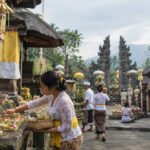
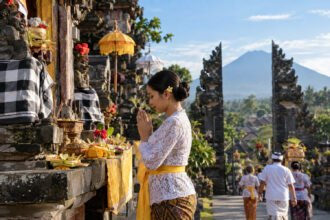
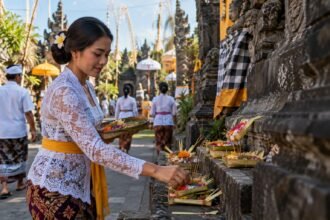
The most common offering seen across Bali is the canang sari, a small palm-leaf tray filled with flowers, rice grains, and a stick of incense. Made fresh every morning, these offerings are placed at temples, home shrines, doorways, and even on motorbikes or shopfronts. The act of making canang sari is itself considered a spiritual practice, often performed by women as part of daily devotion. It is not simply about the object but about mindfulness, gratitude, and intention. Presenting a canang sari is believed to invite blessings while symbolically returning a portion of the earth’s gifts back to the divine forces that sustain life.
Materials and Symbolism
Every element within a Balinese offering carries symbolic weight. The palm-leaf base represents the human body and effort, while the flowers—arranged in specific directions and colors—represent the cardinal points and their corresponding deities. White flowers face east for Iswara, red face south for Brahma, yellow face west for Mahadeva, and blue or green face north for Vishnu. Rice symbolizes prosperity and sustenance, while incense smoke is believed to carry prayers upward to the heavens. Even the act of assembling these elements by hand reflects discipline and respect, reminding practitioners that spirituality is expressed through careful, deliberate action rather than words alone.
Ceremonies and Temple Festivals
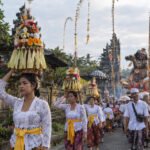
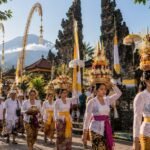
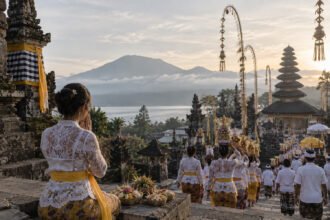
While canang sari offerings happen daily, larger and more elaborate offerings appear during major ceremonies. During Galungan, which celebrates the victory of dharma (good) over adharma (evil), households prepare towering arrangements called penjor—tall bamboo poles decorated with coconut leaves, fruits, and rice cakes—alongside intricate banten offerings for ancestral spirits believed to visit during this period. Odalan, the temple’s anniversary ceremony, brings communities together to create elaborate tiered offerings stacked with fruits and flowers, often carried gracefully atop women’s heads in vibrant processions. Even Nyepi, the Day of Silence, is preceded by offerings and purification rituals meant to cleanse the island of negative energy before a full day of stillness begins.
Offerings as Social and Cultural Glue
Beyond their spiritual purpose, Balinese offerings play an essential role in strengthening community bonds. Preparing offerings for temple ceremonies is rarely a solitary task; it is typically a collective effort involving extended family, neighbors, and banjar (local community groups). Women often gather together to weave palm leaves and arrange flowers, turning the process into a shared social activity that reinforces relationships and passes traditions from one generation to the next. This communal aspect ensures that offerings are not just individual expressions of faith but also vehicles for cultural continuity, teaching younger generations the values of cooperation, patience, and respect for heritage.
Preserving Heritage in Modern Times
As Bali experiences rapid tourism growth and modernization, offerings remain a powerful symbol of cultural resilience. Despite busy schedules and urban development, most Balinese families continue their daily ritual of preparing and placing canang sari, treating it as a non-negotiable part of life rather than an optional custom. Some younger Balinese have even found creative ways to document and share the practice through social media, helping outsiders understand its deeper meaning rather than viewing it merely as a picturesque tradition. This blend of preservation and adaptation shows how deeply offerings are embedded in Balinese identity, functioning as a living heritage rather than a static custom frozen in time.
Offerings and the Balance of Nature
Another important dimension of Balinese offerings is their connection to environmental respect. Because Palemahan emphasizes harmony with nature, offerings often double as small acts of ecological mindfulness. Placing offerings at rice fields, rivers, or the ocean acknowledges the natural elements that sustain agricultural and daily life. Farmers frequently present offerings to the rice goddess, Dewi Sri, believing that gratitude toward nature ensures a fruitful harvest. This spiritual-ecological relationship illustrates how Balinese customs encourage sustainable thinking long before modern environmental movements popularized such ideas, embedding ecological respect into everyday religious practice rather than treating it as a separate concern.
Conclusion
Balinese offerings are far more than colorful trays placed along sidewalks—they are living expressions of gratitude, spirituality, and community connection. From the humble daily canang sari to the elaborate ceremonies of Galungan and Odalan, each offering reflects the island’s deep-rooted philosophy of balance between humans, nature, and the divine. These rituals preserve heritage while adapting to modern life, proving that tradition and progress can coexist. For visitors and locals alike, understanding the meaning behind these offerings offers a richer appreciation of Bali—not just as a tropical destination, but as a place where spirituality quietly shapes the rhythm of everyday existence.
Frequently Asked Questions
Why do Balinese people make offerings every single day?
Daily offerings, called canang sari, express gratitude and maintain spiritual balance. They reflect devotion to God, ancestors, and nature, following the philosophy of Tri Hita Karana central to Balinese Hindu life.
What materials are typically used in Balinese offerings?
Offerings usually include palm-leaf trays, flowers, rice grains, and incense. Each material symbolizes gratitude, purity, and prayer, with flower colors representing specific deities linked to the four cardinal directions.
Are Balinese offerings only used during religious ceremonies?
No, offerings appear daily in homes, shops, and streets, not just during ceremonies. While festivals like Galungan feature larger displays, small offerings remain a continuous, everyday spiritual practice across Bali.