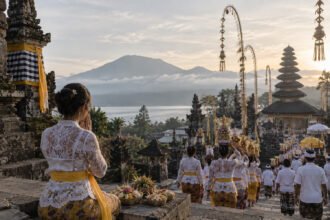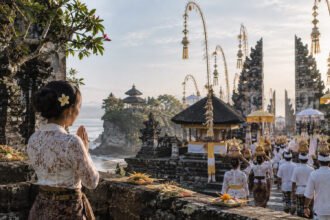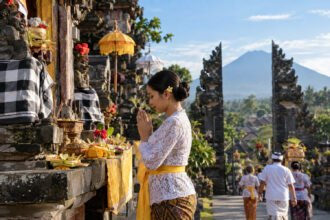


Bali is often called the “Island of the Gods,” and anyone who visits quickly understands why. Balinese Hinduism, a distinctive blend of ancient Hindu philosophy, animism, and local wisdom, shapes nearly every aspect of island life. From sunrise offerings placed outside shopfronts to elaborate temple festivals that halt traffic, spirituality isn’t confined to religious spaces—it spills into streets, homes, rice fields, and beaches. For travelers, this constant presence of faith transforms an ordinary holiday into something deeply immersive. Understanding how Balinese Hinduism influences daily rhythms and cultural experiences helps visitors appreciate the island beyond its beaches, revealing a living heritage that continues to shape identity, community, and hospitality.
The Spiritual Foundation: Tri Hita Karana
At the heart of Balinese Hinduism lies the philosophy of Tri Hita Karana, meaning “three causes of well-being.” This principle teaches harmony between humans and God (Parhyangan), humans and other humans (Pawongan), and humans and nature (Palemahan). This isn’t just theology—it’s a practical guide for daily living. It explains why Balinese architecture always includes a family temple, why villages operate on collective cooperation (banjar systems), and why rice terraces are treated as sacred landscapes rather than mere farmland. Travelers who understand this philosophy begin to see Bali differently, recognizing that the island’s beauty and order stem from a deliberate spiritual balance rather than coincidence.
Daily Offerings: Canang Sari
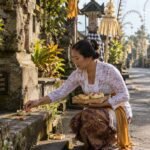
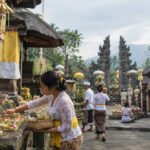
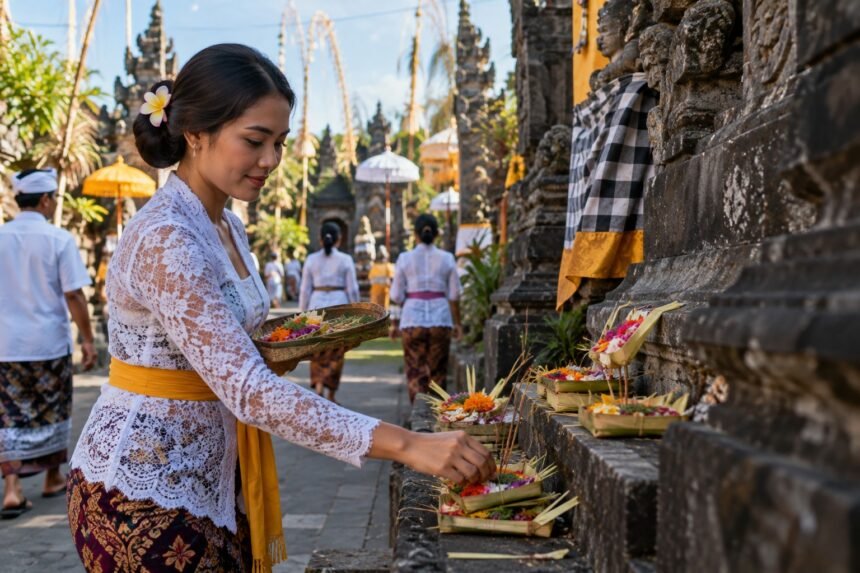
Perhaps the most visible expression of Balinese Hinduism is the canang sari, small palm-leaf trays filled with flowers, rice, and incense. These offerings appear everywhere—on doorsteps, dashboards, statues, and even ATM machines—placed fresh each morning as gratitude to the divine. For tourists, spotting these intricate little baskets becomes part of the daily walk through any village or city street. They symbolize impermanence and devotion, reminding visitors that spirituality here isn’t reserved for special occasions; it’s woven into the mundane. Watching a shopkeeper pause mid-morning to lay an offering, unbothered by customers waiting, offers a quiet lesson in prioritizing faith over commerce.
Temples: Architecture as Devotion
Bali is home to thousands of temples, each with its own significance, from grand sea temples like Tanah Lot and Uluwatu to small family shrines. These aren’t merely tourist attractions; they are active places of worship governed by strict customs. Visitors are typically required to wear a sarong and sash, and menstruating women are traditionally asked to refrain from entering inner temple grounds—a rule rooted in beliefs about spiritual purity, not restriction. Temple architecture itself reflects cosmology: multi-tiered meru towers represent sacred mountains, while split gateways (candi bentar) symbolize the balance between opposing spiritual forces. Exploring these structures offers travelers a tangible connection to centuries-old belief systems still practiced today.
Ceremonies and Festivals That Shape Travel Timing
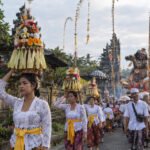
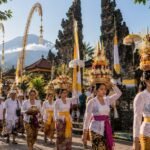
Few places integrate ceremony into public life as thoroughly as Bali. Major events like Nyepi, the Day of Silence, transform the entire island into a period of stillness—no flights, no lights, no activity—as Balinese Hindus observe self-reflection and spiritual cleansing. Galungan and Kuningan celebrate the victory of dharma over adharma, filling streets with towering bamboo penjor decorations. Odalan, temple anniversary ceremonies, occur constantly across the island’s thousands of temples, often unannounced to outsiders yet visually spectacular. Travelers who time their visit around these events witness processions, gamelan music, and traditional dress that no ordinary sightseeing itinerary could replicate. However, these ceremonies also require flexibility, as some businesses close and certain areas become inaccessible.
Customs That Shape Everyday Interactions
Balinese Hinduism influences not just rituals but everyday etiquette. Respect for elders, community obligations through the banjar system, and caste-influenced language nuances all trace back to religious values. Visitors quickly notice how hospitality workers greet guests with genuine warmth rooted in the concept of seva, or selfless service, considered a spiritual duty rather than mere job performance. Even dietary practices, such as the significance of certain foods during ceremonies, reflect deeper spiritual meaning. This cultural undercurrent explains why Bali often feels different from other tropical destinations—the friendliness isn’t performative tourism branding; it’s an extension of religious values embedded in daily conduct.
Heritage Preservation Amid Modern Tourism
As Bali grows into a global travel hotspot, Balinese Hindu communities work actively to preserve their heritage amid rapid development. Villages maintain adat (customary law) alongside formal governance, ensuring that land use, ceremonies, and communal responsibilities remain protected even as hotels and resorts expand. Subak, the traditional irrigation system tied to water temples, has even earned UNESCO recognition for blending agricultural practicality with spiritual cooperation. For conscious travelers, supporting local artisans, respecting temple etiquette, and choosing community-based tourism initiatives contribute to sustaining this heritage rather than diluting it.
Why Travelers Are Drawn to This Spiritual Immersion
Modern travelers increasingly seek meaningful experiences over checklist tourism, and Bali delivers this through its living spirituality. Yoga retreats often incorporate Hindu philosophy, wellness centers reference Ayurvedic and local healing traditions, and cultural tours emphasize temple etiquette education rather than just photography stops. This authentic integration of religion into tourism infrastructure means visitors aren’t just observing Balinese Hinduism from a distance—they’re invited, respectfully, to participate in its rhythm. Whether attending a purification ceremony at a water temple or learning to make offerings from a local family, these experiences leave a lasting impression far beyond typical vacation memories.
Conclusion
Balinese Hinduism is far more than a religious label—it’s the invisible architecture behind the island’s culture, hospitality, and daily rituals. From morning offerings to grand temple festivals, spirituality shapes how locals live, work, and welcome visitors. For travelers, this presence transforms Bali into more than a scenic escape; it becomes a cultural immersion rooted in centuries-old philosophy. By respecting customs, understanding ceremonies, and engaging thoughtfully with local traditions, visitors gain a richer, more meaningful travel experience. Ultimately, Bali’s enduring charm lies not just in its landscapes, but in the deep spiritual heartbeat that continues to guide its people and their way of life.
Frequently Asked Questions
Why do Balinese people place offerings outside their homes daily?
Canang sari offerings express gratitude and maintain spiritual balance. They symbolize devotion to deities and ancestors, reflecting Tri Hita Karana’s philosophy of harmony between humans, nature, and the divine.
What should tourists wear when visiting Balinese temples?
Visitors must wear a sarong and sash, covering the legs respectfully. These garments symbolize modesty and spiritual readiness, and most temples provide rentals near entrances for travelers without proper attire.
Does Nyepi affect tourists staying in Bali during that time?
Yes, during Nyepi, flights, businesses, and public activity stop entirely. Tourists must remain indoors or at hotels, observing silence alongside locals as the island honors this spiritual self-reflection day.