

Most visitors come to Bali for the beaches, rice terraces and sunsets. Fewer stop to ask who keeps the island so beautiful. Behind every spotless temple path, every cup of coffee and every ceremony stands a community that works quietly, patiently and with remarkable devotion. Farmers rise before dawn, women craft offerings by hand, artisans carry skills across generations, and neighbours give their time freely for shared causes. This blog introduces the people of Bali and the hard work that sustains their home. If you want to travel with deeper understanding and respect, start here and meet the hands behind the island.
A Community Built on Togetherness
To understand Balinese people, start with the banjar, the neighbourhood community that organises much of village life. Families in a banjar share responsibilities for weddings, funerals, temple festivals and local repairs. Nobody waits to be paid for this. It is seen as a duty and an honour, and it reflects a spirit similar to gotong royong, the Indonesian tradition of working together.
This sense of balance also appears in the philosophy of Tri Hita Karana, which encourages harmony between people, nature and the divine. It is not just a phrase on a hotel brochure. It shapes how many Balinese farm, build, celebrate and resolve disagreements.
Farmers Who Shape the Landscape
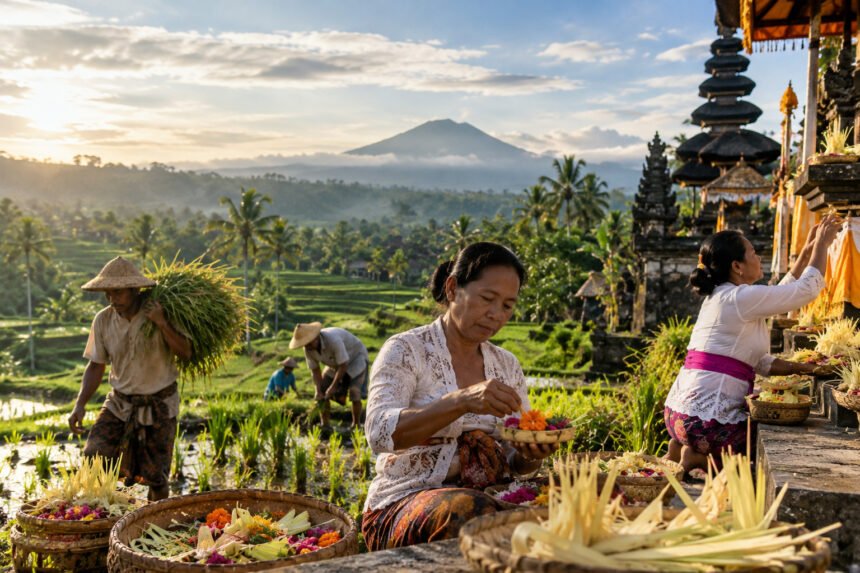
Those famous green terraces do not appear by accident. Farmers maintain them through the subak, a traditional water-sharing system that coordinates irrigation among rice growers. Its fairness and spiritual grounding earned UNESCO World Heritage recognition in 2012.
The work is demanding. Farmers wake early, repair channels, plant seedlings by hand and work under strong sun. They also make offerings at small shrines in the fields, thanking the forces they believe sustain the harvest. When you photograph a terrace, you are looking at generations of patient labour, so take a moment to appreciate it.
Women Behind the Daily Offerings
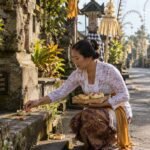
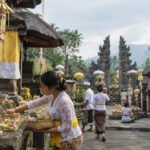
Walk through any Balinese morning and you will see small woven trays of flowers, rice and incense placed on doorsteps, shrines and shop counters. These canang sari are prepared daily, and women often make them, sometimes after cooking for the family, running a stall or finishing a shift elsewhere.
Preparing offerings takes time, skill and care. Women also coordinate large ceremonial food preparation, manage household finances and run many of the island’s small businesses. Their work is often invisible to visitors, yet the rhythm of Balinese spiritual life depends on it.
Artisans Keeping Tradition Alive
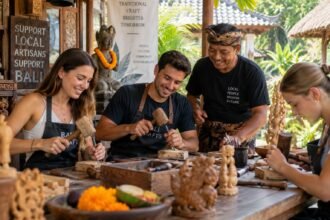
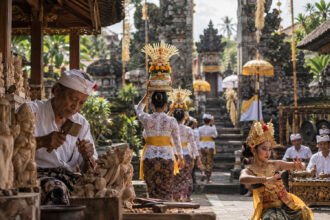
Bali’s creative reputation rests on real people with real skill. Woodcarvers in Mas, silversmiths in Celuk, stone carvers in Batubulan and painters in Ubud learn their crafts through years of practice, often within families. Weavers create endek and other textiles on looms, where a single piece can take days or weeks.
A handmade mask or carving is therefore not just a souvenir. It carries hours of concentration, inherited technique and cultural meaning. Many artisans also face rising material costs and competition from cheap mass-produced imitations. Buying directly from them, at fair prices, helps traditions survive.
The Faces of Hospitality
Tourism supports huge numbers of Balinese families. Drivers wait through long days, hotel staff work shifts across holidays, guides study history and languages, and warung owners cook from early morning until late evening. Many also balance these jobs with family, ceremonies and banjar obligations.
The importance of this work became painfully clear when travel stopped in 2020. Income vanished almost overnight, and many people returned to farming, fishing or small-scale trade to feed their households. Their resilience then, and their warm welcome since, deserve recognition rather than assumptions that hospitality is effortless.
Guardians of Culture and Ceremony
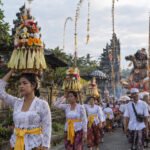
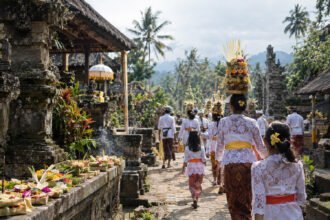
Dancers, gamelan musicians, priests and young community groups give countless hours to keep ceremonies alive. Before Nyepi, the Day of Silence, local youth groups spend weeks building towering ogoh-ogoh figures from bamboo, paper and creativity. Then comes a full day when the island goes still: no travel, no lights and no noise.
Imagine a place where an entire population willingly pauses for reflection. That discipline, shared by neighbours of all ages, says a great deal about Balinese character.
How to Travel in a Way That Honours Them
Respect is the simplest way to say thank you.
- Greet warmly. A smile and a polite “terima kasih” go a long way.
- Dress modestly at temples and follow the instructions of local staff.
- Never step on offerings. If you accidentally do, no one expects perfection, but care matters.
- Pay fair prices. Bargain gently, if at all, and remember that small amounts matter greatly to small businesses.
- Ask before photographing people or ceremonies.
- Choose local. Eat in family warungs, stay in homestays and hire local guides where you can.
Conclusion
Bali’s beauty is not only found in its landscapes. It lives in the farmers who guide the water, the women who prepare daily offerings, the artisans who shape wood and silver, and the many workers who welcome the world with patience. Their efforts keep culture alive and communities strong, often without applause. As a visitor, you can answer that effort with curiosity, kindness and fair support. Learn a few words, listen to local stories, and spend your money where it truly helps. When you leave, carry more than photos. Carry gratitude for the people who make Bali what it is.
Frequently Asked Questions
How can visitors respect the hardworking local people of Bali during travel?
Greet people politely, dress modestly near temples, never step on offerings, and ask before photographing ceremonies. Small acts of courtesy show you value their culture and the effort behind it.
What is the best way to support local Balinese families directly?
Eat at family-run warungs, buy crafts from artisans or village markets, hire local guides and drivers, and stay in locally owned homestays. Paying fair prices matters far more than aggressive bargaining.
Why do ceremonies sometimes close roads or delay my travel plans?
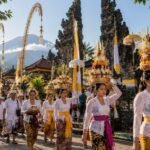
Processions are sacred and often unannounced. Be patient, pull over, and wait respectfully. Allow extra travel time, and remember that these ceremonies are central to community life, not an interruption.