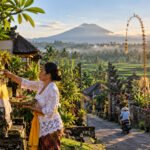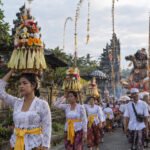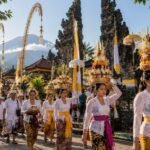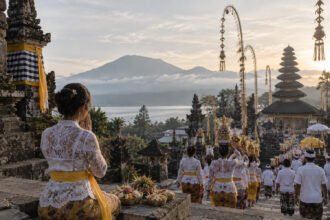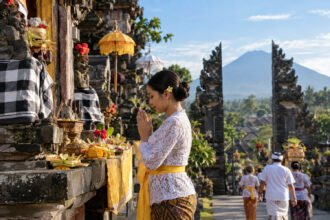


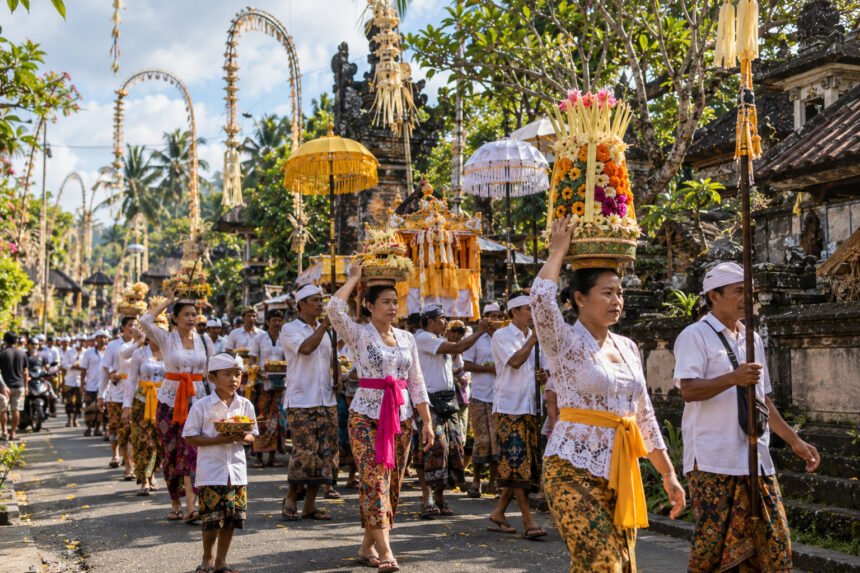
Most people picture Bali as white-sand beaches, rice terraces, and sunset cocktails. Those things exist, but they are only the surface. Spend a few mornings on the island and you will notice something deeper: fresh flower offerings on every doorstep, incense drifting through the air, and villagers in white and gold walking toward a temple. This is Balinese culture in action, and it is not staged for tourists. It is a living way of life that has shaped the island for centuries. Here is a friendly guide to understanding it.
Tri Hita Karana: The Philosophy Behind Everything
To understand Bali, start with a concept called Tri Hita Karana. It means “three causes of well-being,” and it teaches that a good life depends on harmony with God, with other people, and with nature.
You can see this idea everywhere. Hotels are often built around sacred trees instead of cutting them down. Families set aside space for a small shrine. Neighbors settle disputes through conversation, not conflict. Even the layout of a traditional home follows spiritual logic, with the most sacred corner facing the mountains and the less sacred areas facing the sea.
Once you grasp this philosophy, many Balinese customs stop feeling like random rituals. They become different ways of keeping life in balance.
Bali’s Unique Hinduism
Indonesia is a Muslim-majority country, yet Bali is mostly Hindu. Balinese Hinduism is not a copy of the Indian version. Over centuries it blended with local ancestor worship and animist beliefs, creating something distinctly its own.
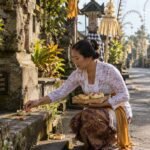
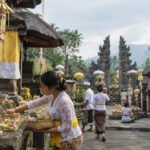
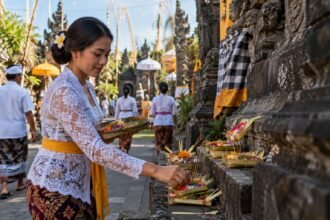
The most visible sign is the canang sari, a small woven palm-leaf basket filled with flowers, a bit of rice, and incense. Locals place these offerings several times a day on shrines, sidewalks, car dashboards, and shop counters. They are a way of saying thanks to the gods and keeping negative forces calm.
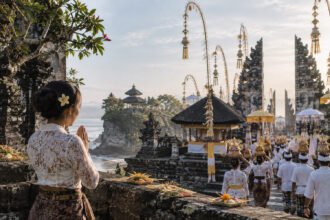
The island also has thousands of temples, known as pura. Every village has at least three, and every family compound has its own shrine. Some, like Tanah Lot and Uluwatu, are famous for their dramatic clifftop settings. Others, like Besakih, the “Mother Temple,” sit high on the slopes of Mount Agung and carry deep spiritual weight. Visiting early in the morning, before crowds arrive, gives you a much calmer feel for these places.
Ceremonies and Festivals That Mark the Calendar
Balinese life moves to a calendar that most visitors have never seen. Alongside the standard 12-month calendar, locals follow a 210-day cycle called Pawukon, which decides when ceremonies take place. That is why you might stumble upon a festival on any given week.
Nyepi, the Day of Silence. Celebrated as the Balinese New Year, Nyepi is unlike any holiday in the world. For 24 hours, the entire island shuts down. There is no traffic, no loud noise, no lights, and even the airport closes. The night before, villagers parade giant demon statues called ogoh-ogoh through the streets, then burn them to chase away bad spirits.
Galungan and Kuningan. These festivals celebrate the victory of good over evil. Streets are decorated with tall, curved bamboo poles called penjor, and families gather to pray and share food. Spirits of ancestors are believed to visit their former homes during this time.
Life-cycle ceremonies. Birth, tooth-filing, marriage, and cremation are all marked by elaborate rituals. A Balinese cremation, for example, is often a colorful and even joyful event, because it is seen as freeing the soul for its next journey.
The Arts: Dance, Music, and Craft
In Bali, art is not a hobby for a select few. It is part of everyday community life, and many villagers learn to dance, play music, or carve from a young age.
Dance. The Legong is a graceful dance performed by young women in golden costumes, with delicate hand and eye movements. The Barong dance tells the story of the good spirit Barong battling the witch Rangda. The Kecak, sometimes called the “monkey chant,” uses dozens of men chanting in rhythm instead of using instruments.
Gamelan music. The shimmering sound of the gamelan, an ensemble of bronze gongs, metallophones, and drums, accompanies most ceremonies and performances. Each ensemble is usually owned by the village, not an individual.
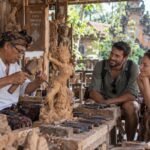
Crafts. Ubud is the island’s creative heart, but craft traditions are spread across villages. Celuk is known for silver, Mas for wood carving, and Batuan for intricate painting. Buying directly from a workshop, rather than a mass-market shop, helps these traditions survive.
Banjar and Subak: Community at the Center
Two traditional systems explain why Balinese communities feel so tightly knit.
The banjar is a neighborhood association that every married adult joins. Members help each other prepare for ceremonies, build shared spaces, and support families during difficult times. It is a social safety net that has worked for generations.
The subak is an ancient water-management system used by rice farmers. Instead of fighting over water, farmers coordinate through a council that shares irrigation fairly. It is so well designed that UNESCO recognized the Jatiluwih rice terraces and the wider subak landscape as a World Heritage Site.
How to Experience Bali’s Culture Respectfully
You do not need to be an expert to enjoy Balinese culture, but a few small habits go a long way:
- Dress modestly at temples. Wear a sarong and sash, which are often available for rent at the entrance.
- Do not step on offerings. They are placed on the ground, so watch your step.
- Ask before photographing ceremonies. Stay at a respectful distance and never stand higher than a priest.
- Avoid entering temples if you are menstruating. Some temples still ask visitors to follow this custom.
- Join a local workshop. Try a canang-making, dance, or cooking class led by a local teacher.
Conclusion
Bali’s culture is not a museum piece. It is something people live each day, through small offerings, shared labor, music, and prayer. When you approach it with curiosity and respect, the island opens up in ways no beach or infinity pool can match. Take time to slow down, ask questions, and let the rhythm of village life guide you. You will leave with more than photographs. You will carry a richer understanding of how community, nature, and faith can work together, and that may be the most valuable souvenir of all.
Frequently Asked Questions
What should I wear when visiting a Balinese temple as a tourist?
Wear a sarong around your waist and a sash, with shoulders covered. Most major temples rent or lend these at the entrance, so you do not need to buy them beforehand.
Can I travel around Bali during Nyepi, the Day of Silence?
No. For 24 hours, everyone must stay indoors, and the airport closes. Plan ahead by booking accommodation, stocking food, and avoiding flights or travel on that day.
How can I support Balinese culture without accidentally being disrespectful or intrusive?
Buy crafts directly from artisans, attend ceremonies only when invited, follow local etiquette, hire local guides, and ask permission before taking photos of rituals or people.